
Why You Lose Confidence on the Bike When You Get Tired
- Alex Ackerley
- 3 days ago
- 5 min read
Many mountain bikers assume losing confidence on technical trails is purely a skill problem. But in reality, fatigue, strength, trunk stability, and endurance all play a major role in how composed and controlled you feel on the bike — especially late in rides, race stages, long descents, and technical climbs.
There’s a moment most riders know well.
The trail hasn’t suddenly become harder.The features aren’t bigger.Your technique didn’t disappear overnight.
But somewhere deeper into the ride, things start to feel… off.
Corners get messy.Braking feels inconsistent.Your upper body stiffens.You stop committing to lines you’d normally ride confidently.
The bike suddenly feels harder to control.
And most riders assume the problem is technical.
Usually, it’s physical too.

Why Confidence Falls Apart Under Fatigue
One of the biggest mistakes mountain bikers make is separating “fitness” and “technique” as if they’re unrelated.
They’re not.
You can only express skill through the body you currently have available.
Your ability to:
stay stable through rough terrain
absorb impacts
maintain traction
stay composed under braking
react quickly to mistakes
hold strong body position on technical terrain
…all depends heavily on your physical capacity.
When your body starts losing integrity under fatigue, your riding changes with it.
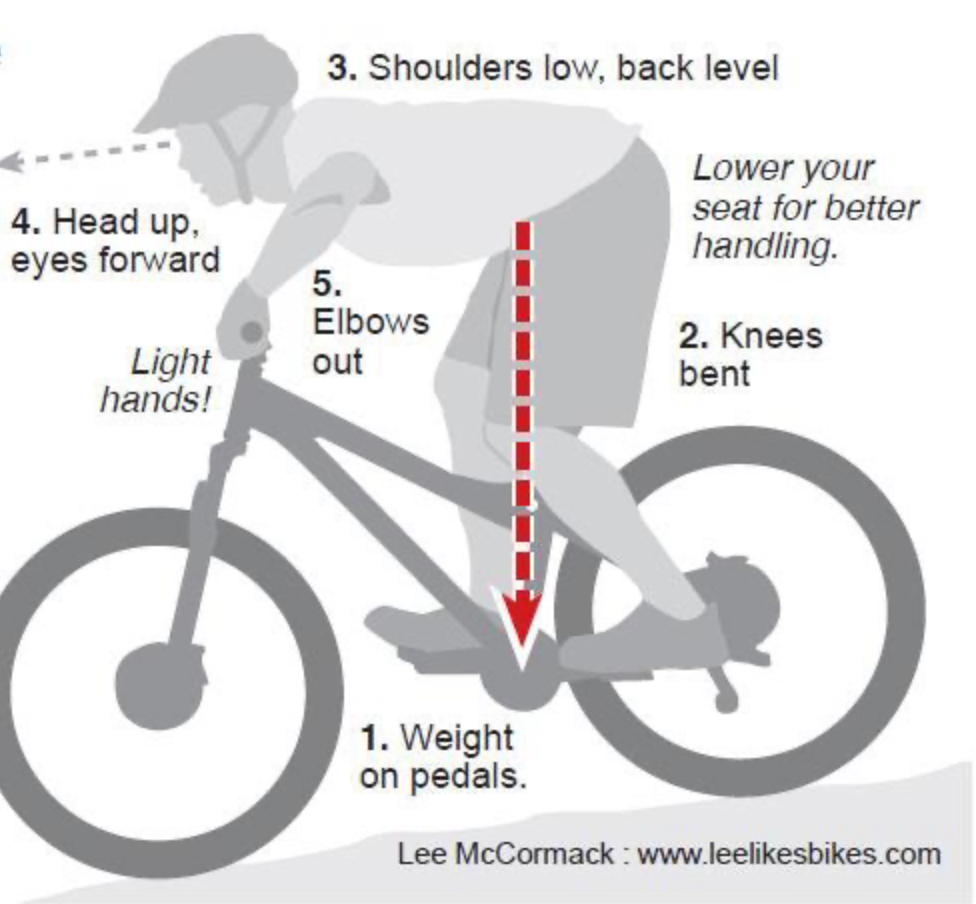
Your hips drift backward.Your chest rises.Your legs stop supporting you properly.You start dumping weight into your hands.
That’s when riders begin death-gripping the bike.
Not because the hands are the original problem.
Because the legs, trunk, and posterior chain are no longer supporting posture and force effectively enough.
Your upper body stiffens.Your reactions slow down.The bike starts feeling heavy and chaotic beneath you.
You stop riding the trail and start surviving it.
That’s why trails often feel dramatically harder late in rides or race stages.
Not because you suddenly forgot how to ride.
Because fatigue changed your ability to express skill.
Why Stronger Riders Often Look Smoother
One of the biggest misconceptions in mountain biking is that fitter riders are simply able to “try harder” for longer.
But often the opposite is true.
The fitter and stronger you are, the less unnecessary work you end up doing.
Strong riders stay relaxed longer.
They:
grip the bike less
breathe better
absorb terrain more naturally
move dynamically underneath the bike
maintain traction more efficiently
react instead of panic
stay fluid instead of stiff
That creates a positive feedback loop.
The stronger and fitter you are:
the more relaxed you ride
the smoother your technique becomes
the less energy you waste
the less fatigued you get
the more confidence you maintain
This is why experienced, fit riders often look calm and effortless on difficult terrain.
Not because the trail is easy for them.
Because they aren’t fighting the bike the entire way down.
Why More Riding Isn’t Always the Answer
This is where many riders get stuck.
They feel unstable or inconsistent on the bike, so they assume the answer is simply more riding.
And yes — riding matters. A lot.
But riding mainly exposes bottlenecks.It doesn’t automatically solve all of them.
In fact, sometimes riding more simply reinforces the same compensation patterns over and over again.
If your trunk collapses under fatigue, more fatigued riding may just reinforce that pattern.
If your lower body stops supporting you deep into descents, you’ll continue shifting weight into the hands and upper body.
If your posture deteriorates after repeated impacts, more descending won’t necessarily build the durability needed to maintain it.
This is why some riders plateau despite riding constantly.
Their technical ceiling is no longer purely technical.
It’s physical.
The Physical Side of Bike Handling
When riders talk about “confidence,” they usually think of courage or mentality.
But a huge percentage of confidence on technical terrain comes from having enough physical reserve that the trail never pushes you past your ability to stay composed.
Strong riders aren’t just stronger because they can produce more force.
They’re stronger because they can maintain quality movement longer.
They:
absorb impacts better
resist fatigue better
maintain posture better
recover from mistakes faster
repeat hard efforts without falling apart
stay calm when trails get rough
That composure changes everything.
You brake later.You corner better.You stay smoother through rough sections.You stop riding defensively.
And interestingly, this often shows up most clearly on climbs.
One of my clients recently mentioned that technical climbs suddenly felt less strenuous — but more importantly, she was cleaning sections she previously couldn’t make.
That’s not just fitness.
That’s improved control under fatigue.
3 Physical Bottlenecks That Make Riders Feel Sketchy
1. Trunk and Posterior Chain Fatigue
If your trunk, glutes, and back stop supporting position properly, posture begins collapsing under fatigue.
This is one of the biggest reasons riders start feeling unstable late in descents and rough terrain.
2. Poor Force Absorption Capacity
Mountain biking is repeated force absorption.
If your legs can’t continue absorbing terrain effectively, your upper body eventually starts taking over.
That’s when riders become stiff, reactive, and overwhelmed by rough trails.
3. Lack of Aerobic and Muscular Stamina
When your system runs out of reserve, technique disappears quickly.
Smooth riders stay smooth because they still have capacity left late into the ride.
How Strength Training Improves Technical Riding
Good mountain bike strength training isn’t random gym work.
It’s targeted work that improves your ability to:
hold positions under fatigue
resist collapse
support yourself through the pedals and hips
absorb force repeatedly
stay powerful when tired
maintain technique deep into rides and race stages
In other words:
It improves your ability to stay relaxed and dynamic on the bike when the trail starts demanding more from you.
That’s where confidence really comes from.
Not just bravery.
Capacity.
Final Thought
If you constantly feel:
sketchy late in rides
unstable on technical terrain
physically overwhelmed on descents
inconsistent on technical climbs
strong early but sloppy later
…it may not mean you need more courage.
And it may not even mean you need dramatically better technique.
It may simply mean your body is running out of resources before the ride is over.
Because confidence on the bike isn’t just mental.
Confidence is having enough physical capacity to stay composed, relaxed, and dynamic deep into the ride.
The fitter you are, the less work you end up doing.
Not Sure What Your Biggest Bottleneck Is?
That’s exactly why I built the MTB Fitness Test.
Most riders don’t actually know whether their biggest limiter is:
strength
endurance
trunk stability
mobility
fatigue resistance
or technical capacity under fatigue
The assessment helps identify the physical qualities most likely holding your riding back — and what to focus on next.
If you want to ride stronger, feel more composed, and stop breaking down on the bike, start here.

Comments