
The Real Reason You Get Sore on the Bike
- Alex Ackerley
- 3 days ago
- 5 min read
Why mountain bikers get sore hands, tight shoulders, lower back fatigue, and arm pump — and what actually helps
A lot of mountain bikers assume soreness on the bike is just part of riding hard.
Sore hands.Pumped forearms.Tight shoulders.Lower back fatigue.Feeling completely cooked halfway through a descent.
And to be fair — mountain biking is physically demanding.
But a surprising amount of rider fatigue doesn’t come from lack of effort or lack of fitness alone.
It comes from tension.
More specifically:
carrying too much tension
supporting yourself poorly on the bike
and using the wrong parts of your body to manage force
That’s when riding starts feeling harder than it should.
Most Riders DoNeed More Fitness
To be clear — most mountain bikers probably do need more fitness.
More riding is usually a good thing.
The best riders in the world spend huge amounts of time on their bikes.
But if your movement patterns and support systems aren’t working properly, riding more can sometimes reinforce the exact thing that’s already beating you up.
If you:
death-grip the bars
stiffen your trunk under fatigue
lose your hinge position
or struggle to support yourself properly through rough terrain
…then more riding can simply mean:
more tension
more fatigue
more soreness
and more compensation
That’s why some riders feel like:
“The fitter I try to get, the more wrecked I feel.”
They’re building fitness on top of inefficient movement patterns.
The answer usually isn’t riding less.
It’s improving the way your body supports the riding you’re already doing.

Technique Is Physical Too
I recently ran a poll asking riders what they felt limited them most on the bike.
The results were interesting:
Technique — 33%
Legs — 25%
Body / pain / tightness — 25%
Lungs — 17%
At first glance, technique “wins.”
But honestly, I think these things overlap far more than riders realize.
Because technique expression is physical too.
A rider can know exactly what they should be doing:
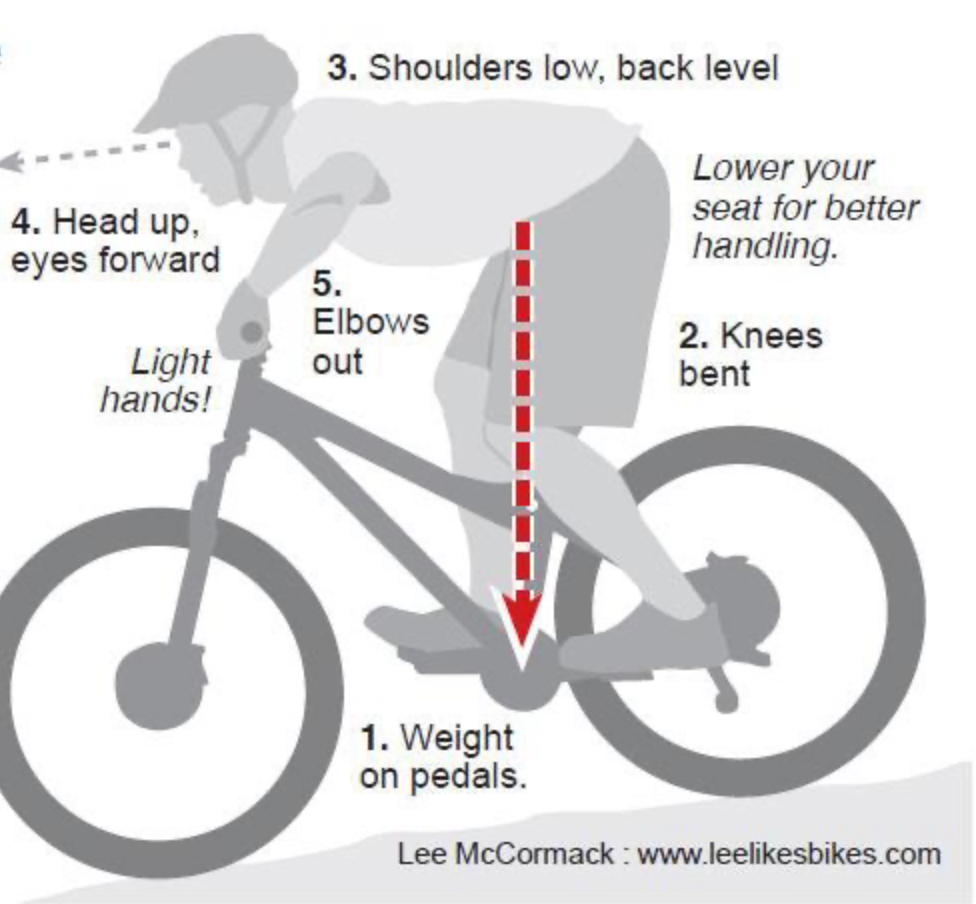
elbows out
light hands
stable trunk
strong hinge
heavy feet
…but still lose all of it once fatigue and tension start building.
That’s why riders often feel like:
“I ride well for the first half of the ride… then fall apart.”
Their technical understanding didn’t disappear.
Their ability to physically maintain the position did.
This is one of the biggest reasons strength training transfers so well to mountain biking.
Not because strength replaces skill.
But because a stronger, more stable body allows your technique to survive fatigue, rough terrain, and long descents.
That’s when riding starts feeling:
smoother
calmer
more controlled
less exhausting
Most Riders Are Carrying Too Much Tension
This is especially common when trails get steep, rough, or technical.
Riders:
death-grip the bars
shrug their shoulders
stop hinging properly
stiffen their trunk
and try to muscle the bike around underneath them
Then wonder why their hands, shoulders, and upper body are completely wrecked afterwards.
One of the best riding cues I’ve borrowed from MTB coach Jake Johnstone is the idea of “piano hands.”
Light hands.
Relaxed upper body.
Let the bike move underneath you while your hips and trunk support the position.
It sounds simple, but for many riders it completely changes how riding feels.
Strength Often Shows Up as Composure
One of my riders, Christina, recently mentioned something I think a lot of riders can relate to.
She said she’s feeling:
“much more composed on the bike.”
Not just fitter.
Not just stronger.
Composed.
She also mentioned that technical climbs are starting to feel:
less strenuous
smoother
and she’s now making sections she previously couldn’t clear consistently.
That’s a huge shift.
Because technical climbing failures often aren’t just about fitness or technical knowledge.
They happen when:
tension builds
body position breaks down
breathing changes
grip tightens
and riders lose the ability to maintain good movement under load
As riders become stronger, more stable, and more efficient at supporting themselves on the bike, technical riding often starts feeling calmer and less frantic.
The trail doesn’t necessarily get easier.
The rider simply stops fighting it as much.
The Clue Most Riders Miss
One of my riders, Luis, recently noticed something interesting after we cleaned up his riding tension and body position:
“I can’t believe I only took 1 break before one of the downhill sections.”
Then he followed it up with this:
“Less hand fatigue, less tired at the end of it, and more calm going downhill as well.”
That’s important.
Notice what changed:
not just fitness
not just power
not just speed
The whole ride became less stressful.
That’s what efficient riding feels like.
Calm Riders Are Usually Faster Riders
Luis also noticed something else:
“I feel my heart racing less while going downhill.”
That’s not an accident.
When riders stop fighting the bike:
breathing improves
unnecessary tension drops
energy expenditure decreases
confidence improves
The bike starts feeling lighter underneath you.
You stop reacting to every little movement and start flowing with the terrain instead.
That’s one of the hidden benefits of proper strength training and movement support:you don’t just get stronger — you become calmer.
And calmer riders are usually smoother, faster, and more efficient riders too.
A New Bike Probably Won’t Fix This
A lot of riders assume discomfort means:
wrong bike
wrong geometry
wrong stem
wrong bars
And while bike setup absolutely matters, mountain biking is far too dynamic for a perfect setup to solve major movement problems on its own.
We move constantly on mountain bikes:
seated
standing
hinging
cornering
climbing
absorbing impacts
If your body can’t support those positions efficiently, no bike setup will completely solve the issue.
The answer usually isn’t just:
a new bike
more fitness
or more suffering
Most riders actually need a body that can better support the demands of the riding they already love doing.
Riding More Still Matters
None of this means riding less.
In fact, one of the biggest goals of strength training for mountain biking is helping riders tolerate more quality riding with:
less fatigue
less soreness
better recovery
and more consistency
The goal isn’t to replace riding.
The goal is to support it.
When your body works with the bike instead of fighting it, you can:
ride more often
recover better between rides
descend with more confidence
and enjoy riding more
The Goal Isn’t Just Fitness
The goal is:
less wasted energy
less tension
less fatigue
more control
more confidence
You should finish rides feeling worked.
Not destroyed.
That’s the difference between simply being fit… and being physically prepared for the demands of mountain biking.
Want to Find Out What’s Actually Holding Your Riding Back?
If riding constantly leaves you:
tense
exhausted
sore
over-gripped
or fighting the bike
…there’s usually a reason.
👉 Take the MTB Fitness Scorecard and find out what might actually be limiting your riding — and what to do about it.
👉 Or if you're ready to get to work, lets' talk. Book a free Call here.

Comments