THE E-MTB EXPERIMENT — PART 4
I’m preparing to race the 2027 Squamish Enduro on my acoustic mountain bike. I need better climbing fitness, more technical practice and enough strength to handle the demands of racing. But can I introduce an electric mountain bike into my training without compromising my performance? Here’s my plan—and how I’ll find out whether it works.
There’s a question I’ve been asking myself since I started considering buying an electric mountain bike.
Can I add an e-MTB to my riding and still get faster on my acoustic bike?
Not just maintain my current fitness.
Actually improve it.
I’ve set myself a pretty ambitious goal for 2027: race the Squamish Enduro and give it everything I’ve got.
It’s going to be a stretch for my technical skills. I’m comfortable admitting that.
But if my riding skills are going to be tested, I want to make absolutely sure my fitness isn’t another limitation.
I want to arrive at the start line stronger, fitter and more durable than I am today.
And that creates an interesting dilemma.
An e-MTB could give me more opportunities to practise technical riding, spend time on the trails and enjoy riding with friends.
It could also make towing my kid uphill a whole lot easier. He’s been watching his friends get towed by their dads on e-bikes while I’ve been stubbornly doing things the old-fashioned way.
But every hour I spend riding with motor assistance is potentially an hour I’m not spending producing the full power required to propel my acoustic bike.
So is there a trade-off?
Can I incorporate an e-MTB into a properly structured training program without sacrificing the physical qualities I need for racing?
That’s what I’m going to find out.
And rather than relying on how fit I feel, I’m going to test my performance, follow a structured program and measure the results.
1. First, I Need to Understand My Weaknesses
As a strength and conditioning coach, I spend a lot of time helping mountain bikers identify what they actually need to improve.
Sometimes the answer is maximal strength.
Sometimes it’s muscular endurance, aerobic fitness or the ability to repeat hard efforts.
And sometimes the problem isn’t a lack of fitness at all. It’s how training is organized.
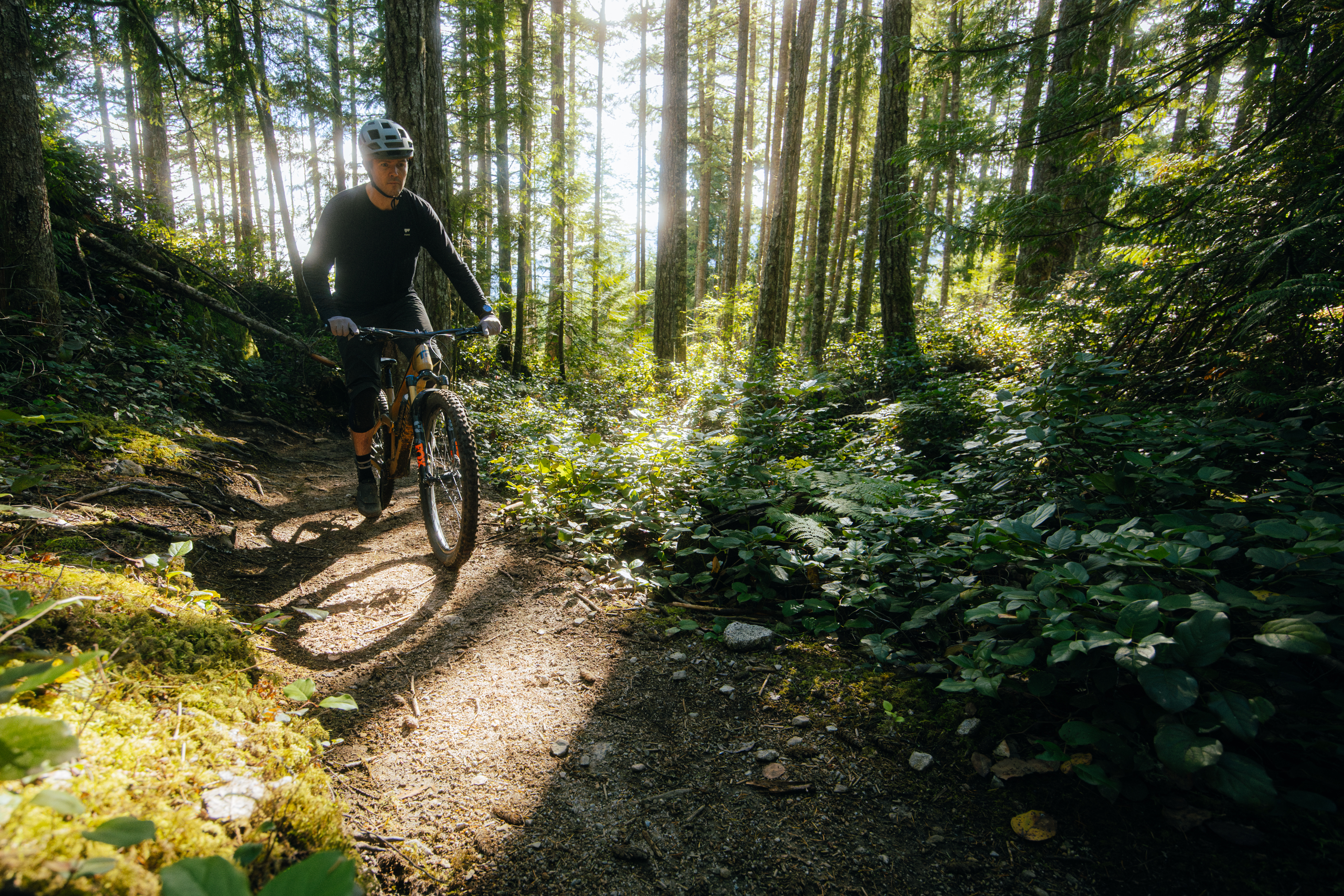
So before designing my own program, I put myself through the MTB Climbing Test I’ve been developing.
The test looks at several different aspects of climbing performance rather than relying on one all-out effort.
It includes five-minute climbing performance, sustained 20-minute performance, repeated one-minute efforts and how well climbing performance holds up later in a ride.
My results were interesting.
My Current Climbing Profile
Test | Result |
|---|---|
Five-minute estimated output | Approximately 3.9 W/kg |
Twenty-minute estimated output | Approximately 3.8 W/kg |
Late-ride 20-minute performance retention | 81.8% |
Repeated efforts | Five one-minute uphill efforts |
These power figures are estimates derived from climbing performance, not direct power-meter measurements. They’re useful for establishing a working profile, but I won’t treat them as exact physiological measurements.
The first thing that stands out is how close my five-minute and 20-minute estimates are.
My shorter-duration performance isn’t much higher than my sustained performance.
That suggests my higher-intensity climbing capacity deserves attention.
The second finding is durability.
During my late-ride 20-minute test, my climbing performance dropped by approximately 18%.
That’s a meaningful decline.
If I’m going to race an enduro, I want to be capable of producing demanding efforts throughout the day, not just when I’m fresh.
So I’ve established two initial priorities.
Priority one: Improve my five-minute climbing performance.
Priority two: Improve my ability to maintain performance as fatigue accumulates.
I’d also like to improve short-duration power, sprinting and repeatability.
But those qualities won’t all receive equal emphasis at the same time.
The program needs to prioritize the biggest opportunities for improvement.
2. Here’s the Problem With Adding an E-MTB
If I want to improve my five-minute climbing performance, I need to spend time training at intensities that develop that ability.
An e-MTB doesn’t automatically provide that stimulus.
Motor assistance reduces the amount of power the rider needs to produce to climb at a given speed.
That’s fantastic when you’re trying to reduce effort.
It’s less helpful when the objective is to maximize your own power output.
Of course, you can work extremely hard on an e-MTB.
You can reduce assistance, choose a steep climb and push yourself to your limit.
But travelling uphill quickly isn’t the same as producing a high level of rider power.
And if I want to get faster on my acoustic bike, I need to make sure I’m developing the physical qualities required to propel it without assistance.
For that reason, my most important climbing intervals will remain on my acoustic bike.
I’m not going to use the e-MTB to replace the training that I know I need.
Instead, I’m going to see whether I can use it around those sessions without compromising my progress.
The e-MTB needs to fit the training program. The training program shouldn’t be compromised to accommodate the e-MTB.
3. My Five Rules for Using the E-MTB
Rather than riding the e-MTB whenever I feel like it, I’m establishing some rules.
These aren’t universal rules for every mountain biker.
They’re specific to my objective of improving acoustic-bike performance while introducing assisted riding.
Rule 1: I’ll Use It When Riding With Other E-MTB Riders
This is probably the simplest rule.
If my friends are heading out on e-bikes, I can join them.
I don’t want training to become so rigid that I stop enjoying riding.
But I’ll still consider the physical demands of the session.
An e-MTB group ride can be genuinely easy or surprisingly demanding.
It depends on the terrain, pace, assistance and how much descending you’re doing.
I’ll account for that workload rather than automatically treating it as recovery.
Rule 2: I’ll Use It When the Program Calls for Easy Riding
This is where I see one of the clearest advantages.
Let’s say my program calls for 90 minutes of easy aerobic riding.
On an acoustic mountain bike, the terrain doesn’t always cooperate.
A steep climb can force me to produce substantially more power than intended, even in my easiest gear.
With an e-MTB, I can increase assistance to keep the effort under control.
That allows me to use more of our local trail network while maintaining the intended training intensity.
The important thing is that I’m controlling rider effort, not simply riding at a particular speed.
If the session is supposed to be easy, it needs to remain easy.
Rule 3: I’ll Use It After Strength Training—Provided the Ride Stays Easy
This is one of the applications I’m most interested in.
Strength and endurance training can compete for recovery resources, particularly when both are demanding.
I want to get stronger, but I also need to spend plenty of time riding.
What happens if I complete a heavy gym session and then head out for a demanding acoustic ride?
I may accumulate fatigue that affects my next workout or reduces the quality of my strength adaptations.
An e-MTB gives me the option to reduce the pedalling workload while still getting out on the trails.
Potentially, that means more opportunities to practise skills without adding as much endurance stress.
But this isn’t a free pass.
Descending still places considerable demands on the legs, upper body and trunk.
If I use the motor to double the number of demanding descents, I might create more fatigue than I would have accumulated on a shorter acoustic ride.
So the rule is straightforward.
After heavy strength training, an e-MTB ride must remain genuinely easy, with controlled technical exposure.
And if I’m too fatigued to practise skills properly, I’ll recover instead.
Rule 4: I’ll Use It More During Consolidation and Deload Weeks
Training isn’t a continuous process of adding more and more work.
There need to be periods when fatigue is reduced so that adaptations can take place.
During those weeks, I may use the e-MTB more frequently.
That could allow me to maintain some riding consistency and technical practice while reducing the demands of climbing.
But the total workload still needs to come down.
A deload week filled with exhausting descents isn’t much of a deload.
The motor can help reduce certain demands.
It’s still my responsibility to manage the overall training load.
Rule 5: I’ll Use It to Tow My Kid Up the Hill
There’s another reason I’m looking forward to having an e-MTB, and it has absolutely nothing to do with structured training.
My kid has been watching his friends get towed uphill by their dads on e-bikes, while I’ve been stubbornly towing him up the old-fashioned way.
Let’s just say he’s been getting a little jealous.
And to be fair, I can see his point.
Towing a kid uphill on an acoustic bike is a pretty solid workout, but it’s not necessarily the workout my training program calls for that day!
With an e-MTB, I’ll be able to tow him up the hill more easily, save some energy and hopefully get more riding in together.
And that’s a pretty good reason to own one, regardless of what happens to my five-minute climbing performance.
Of course, towing adds load, and I’ll still need to account for the effort involved. I’ll also need to make sure the towing setup is compatible with the bike and suitable for the trails we’re riding.
But not every ride needs to be about training.
Sometimes it’s just about getting out and enjoying mountain biking with your kid.
4. The Strength Program: I Want to Stay Strong AF
At around 225 pounds, I’m a relatively heavy mountain biker.
That makes my strength-to-weight and power-to-weight ratios particularly relevant.
But I don’t want to become lighter at the expense of the strength that helps me control my bike.
My priority is to become stronger and more powerful without unnecessarily increasing body mass.
That doesn’t mean I’ll never try to lose weight.
It means I’m not going to chase weight loss at the expense of training quality, recovery or performance.
Maximal Strength: Squats and Deadlifts
Heavy squats and deadlifts will remain central to my strength program.
They’re effective ways to develop maximal lower-body force production.
I’ll also use single-leg exercises to develop strength and control in positions relevant to mountain biking.
The objective isn’t simply to lift the heaviest weight possible.
It’s to increase my ability to produce force while managing the fatigue associated with heavy training.
I want to arrive at the Squamish Enduro strong, but I also need enough energy to train the other qualities that matter.
Explosive Strength: Cleans and Jumps
Maximal strength is only part of the equation.
Mountain biking frequently requires rapid force production.
Lifting the bike over an obstacle, driving through a compression or reacting to an unexpected change in terrain all require the ability to generate force quickly.
I’ll include explosive training through exercises such as jumps, loaded jumps and potentially power cleans.
Cleans are useful if you have the technical proficiency to perform them effectively, but they’re not essential.
A well-designed jump or clean-pull progression may provide a more practical way to develop explosive power without unnecessary technical complexity.
The goal is to improve how quickly I can express strength.
Upper-Body Strength and Trunk Control
Enduro racing is demanding on the entire body.
Repeated descents require strength and endurance through the shoulders, arms, back and trunk.
I’ll continue training pushing and pulling strength, grip capacity and the ability to maintain control under load.
Pull-ups, rows, presses, carries and trunk exercises will all remain part of the program.
These qualities are particularly important when fatigue starts to accumulate and maintaining good riding positions becomes more difficult.
Strength Without Unnecessary Mass
I won’t be training like a bodybuilder.
That doesn’t mean avoiding muscle development entirely.
But the emphasis will be on maximal strength, explosive power and maintaining enough muscle to tolerate the demands of riding.
I’ll use progressive loading, appropriate exercise selection and carefully managed training volume.
If I become stronger at the same body weight, my relative strength improves.
If my climbing performance improves without sacrificing strength, even better.
That’s the direction I want to move.
5. The Riding Program: Improving My Five-Minute Climbing Performance
This is the most important physiological development objective in the early stages of the program.
My climbing test suggests that I have an opportunity to raise my five-minute performance relative to my longer-duration ability.
That doesn’t mean every training session needs to be five minutes long.
It means I need a structured progression designed to improve the physiological qualities that contribute to hard efforts of approximately that duration.
Higher-Intensity Climbing Intervals
I’ll use structured intervals on my acoustic bike, initially emphasizing efforts of approximately three to five minutes.
The precise duration, intensity and recovery will change throughout the training block.
The objective is to accumulate high-quality work at an intensity that challenges my aerobic system and improves my ability to sustain demanding climbing efforts.
These won’t simply be repeated maximal tests.
Training needs to provide a productive stimulus while allowing enough recovery to repeat the work effectively.
Sustained Climbing and Aerobic Development
Improving five-minute performance is only part of the picture.
I also want to improve my 20-minute climbing ability and general aerobic capacity.
That means maintaining appropriate endurance volume and including sustained climbing work as the program develops.
Some of that aerobic riding may take place on the e-MTB.
But the key higher-intensity sessions will remain specific to my acoustic-bike performance.
Durability
My initial testing showed an approximately 18% decline in late-ride climbing performance.
I want to reduce that decline.
And importantly, I want to improve durability while also increasing my absolute performance.
It’s possible to improve a retention percentage without actually becoming a better rider if fresh performance decreases.
That’s not the objective.
I want to climb faster when I’m fresh and maintain more of that performance later in a ride.
Short-Duration Power and Repeatability
I’ll also continue developing the ability to produce short, demanding efforts.
Accelerations, steep technical climbs and repeated changes in speed all require power.
But I won’t try to maximize sprint performance at the same time as every other quality.
Initially, the emphasis will be on improving my five-minute climbing capacity and durability.
As the program progresses, I’ll introduce more focused work on short-duration power and repeatability.
6. What a Training Week Might Look Like
The program will change as I move through different training blocks.
But the general structure could look something like this.
Day | Training |
|---|---|
Monday | Heavy strength — squat emphasis |
Tuesday | Acoustic bike — high-intensity climbing intervals |
Wednesday | Easy e-MTB riding or technical skills practice |
Thursday | Strength — hinge, explosive power and upper body |
Friday | Rest or easy aerobic riding |
Saturday | Acoustic bike — sustained climbing and durability |
Sunday | Technical riding — acoustic or e-MTB depending on fatigue |
This isn’t a commitment to seven days of training.
Some days will be combined, some sessions will be reduced and some weeks will look completely different.
For example, if Monday’s heavy strength work affects the quality of Tuesday’s climbing intervals, I’ll change the schedule.
The important thing is protecting the quality of the sessions that drive my primary objectives.
I’ll also adjust the emphasis throughout the year.
During some blocks, maximal strength will receive more attention.
During others, higher-intensity cycling or explosive power will take priority.
And as the Squamish Enduro approaches, the training will become more specific to the demands of racing.
I don’t need every workout to be hard. I need the right workouts to be hard.
7. The Real Attraction of the E-MTB: More Skills Practice
There’s another reason I’m interested in this experiment.
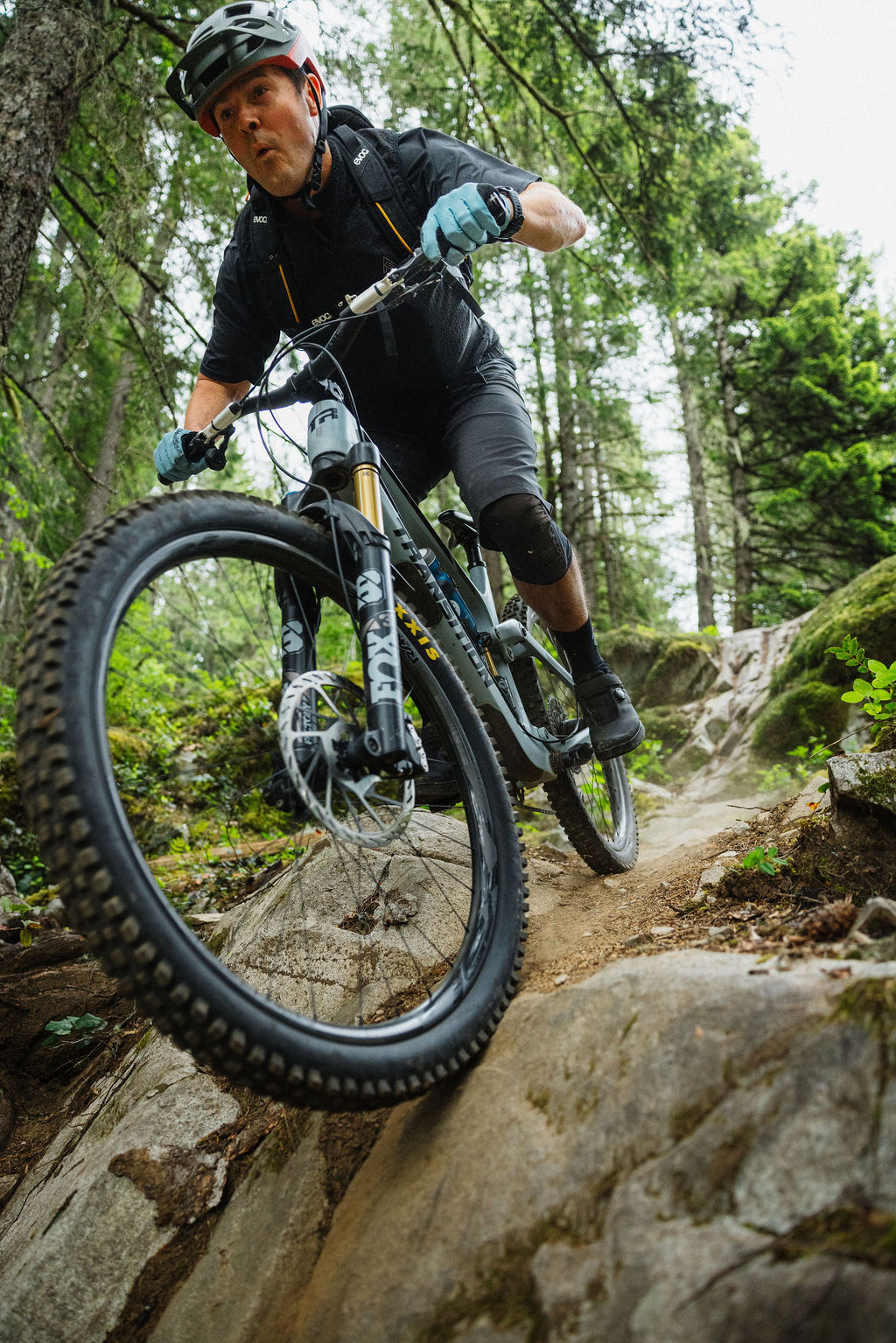
The Squamish Enduro is going to challenge my technical riding.
And while physical fitness is something I know how to develop systematically, technical skills require time, repetition and experience.
I need more opportunities to practise.
That’s where the e-MTB could be particularly useful.
Motor assistance may allow me to get more descending practice into a given amount of time.
Instead of spending most of a session climbing back to the top, I can potentially return to the start of a technical section more efficiently.
That means more opportunities to work on braking, cornering, line choice and body positioning.
But I don’t want to confuse more riding with better practice.
If I’m exhausted and repeatedly riding the same section poorly, I’m not necessarily improving.
I’d rather complete fewer high-quality repetitions with a clear technical objective.
The e-MTB could help me increase the amount of useful practice I accumulate.
But the motor won’t develop those skills for me.
I still need to ride deliberately, evaluate what I’m doing and make improvements.
The goal isn’t more laps. It’s more quality practice.
8. How I’ll Know Whether It’s Working
This is the part that makes the experiment meaningful.
I’m not going to judge success by how much fun I’m having on the e-MTB or how many extra laps I manage.
Those things are valuable, but they don’t answer the question I’m asking.
I want to know whether I can add an e-MTB to my training and still improve my acoustic-bike performance.
So I’ll measure it.
Five-Minute Climbing Performance
This is my primary target.
I’ll repeat my five-minute climbing test on my acoustic bike and look for meaningful improvements.
I’ll aim to use consistent routes and testing conditions wherever possible.
Twenty-Minute Climbing Performance
I’ll continue monitoring my sustained climbing ability.
I want my longer-duration performance to improve alongside my higher-intensity capacity.
Durability
I’ll repeat my fresh-versus-late 20-minute climbing assessment.
The goal is to improve both absolute climbing performance and the percentage of that performance I can retain after accumulating fatigue.
Short-Duration Power and Repeatability
I’ll track my repeated one-minute efforts and short-duration performance.
As training progresses, I’ll look for improvements in peak output and the ability to reproduce demanding efforts.
Strength and Explosive Power
I’ll track key gym lifts and selected explosive performance measures.
I’ll also monitor body weight so I can assess changes in relative strength.
Technical Riding
This is harder to quantify, but just as important.
I’ll monitor how consistently I can ride challenging sections, how well I maintain technique under fatigue and whether my confidence and execution improve.
I’ll also record how much technical riding exposure I’m accumulating.
If the e-MTB allows me to practise more without compromising my physical training, that’s a meaningful benefit.
But I want evidence of improved riding quality, not just more time on the trails.
9. What Would Make the Experiment a Failure?
I think it’s important to establish this before I start.
If my five-minute climbing performance deteriorates because I’ve replaced too much acoustic riding with assisted riding, that’s a problem.
If the additional descending volume compromises my strength training or recovery, that’s a problem.
If I’m constantly tired because I’ve used the e-MTB to squeeze in more riding than I can recover from, the approach isn’t working.
And if I’m accumulating more technical riding without actually improving my skills, I need to rethink how I’m practising.
The e-MTB isn’t automatically beneficial just because it allows me to ride more.
It has to fit within the broader training plan.
I’ll assess the results and adjust how I use it.
That might mean riding it more frequently during certain training blocks.
It might mean using it less during periods when acoustic-bike specificity is particularly important.
And it might mean discovering that some of my assumptions were wrong.
That’s fine.
The objective is to learn what works.
10. What Does This Mean for Other Mountain Bikers?
You don’t need to be racing the Squamish Enduro to apply these principles.
If you ride both an acoustic mountain bike and an e-MTB, think about what each bike allows you to do.
Your acoustic bike can provide highly specific training for unassisted climbing performance.
Your e-MTB can help you regulate intensity, manage certain types of fatigue and potentially accumulate more technical practice.
Neither bike automatically produces better training.
The value comes from how you use them.
If you only ride an e-MTB and your goal is to improve general fitness, you can still train effectively.
You simply need to make sure you’re producing enough effort to create the adaptations you’re looking for.
And if your priority is technical riding, the additional opportunities for practice may be particularly valuable.
The starting point is always the same.
Identify what you want to improve.
Understand the demands of your riding.
Then organize your training accordingly.
The Bottom Line: Can I Add an E-MTB and Still Get Faster?
That’s the experiment.
I’m going to continue developing my climbing fitness through structured training on my acoustic bike.
I’ll keep lifting heavy, working on explosive power and building the durability I need for the Squamish Enduro.
And I’ll use the e-MTB to manage the intensity of easier rides, get more quality descending practice, ride with friends and tow my kid up the hill without turning every family outing into a strength-endurance session.
If I get the balance right, I could have the best of both worlds.
Fitter and faster uphill on my acoustic bike, while becoming a faster, more capable descender through additional technical practice.
That’s the opportunity I’m excited about.
But it’s not guaranteed.
More descending only improves my riding if I’m practising effectively. And using an e-MTB won’t improve my climbing fitness unless I continue doing the work required to develop it.
So I’ll keep testing, monitoring my training and adjusting the program as I go.
I want to see whether I can add all the benefits of e-MTB ownership to my riding life without sacrificing my performance goals.
And if I can get fitter, race better and spend more time riding with my kid along the way?
That’s a pretty compelling argument for having another bike in the garage.
What’s Next in the E-MTB Experiment?
In Part 1, I explored whether buying an e-bike means giving up on fitness.
In Part 2, I looked at how motor assistance can help manage endurance training.
In Part 3, I explained why e-MTB riders still need strength training.
Now I’ve laid out the rules, training priorities and measurements I’ll use to assess my own experiment.
Next, I’ll share what happens when I start putting the plan into practice.
The sessions, the testing, the adjustments and the results.
COMING NEXT: PART 5 — THE FIRST TRAINING BLOCK: WHAT HAPPENS WHEN I ADD AN E-MTB?
Want to Get Stronger, Fitter and More Capable on Your Mountain Bike?
I’m Alex Ackerley, a mountain bike strength and conditioning coach based in Squamish, British Columbia, with more than 20 years of coaching experience.
Through MTB Strength Coach, I help recreational and competitive mountain bikers around the world develop strength, improve performance and manage the demands of riding.
My coaching combines individualized strength training, physical assessment and structured progression with your actual riding schedule.
Whether you’re preparing for an enduro race, trying to improve your climbing fitness or simply want to enjoy more riding without feeling constantly fatigued, the starting point is the same.
Identify what needs improving, build a plan and measure your progress.
Explore MTB Strength Coaching →