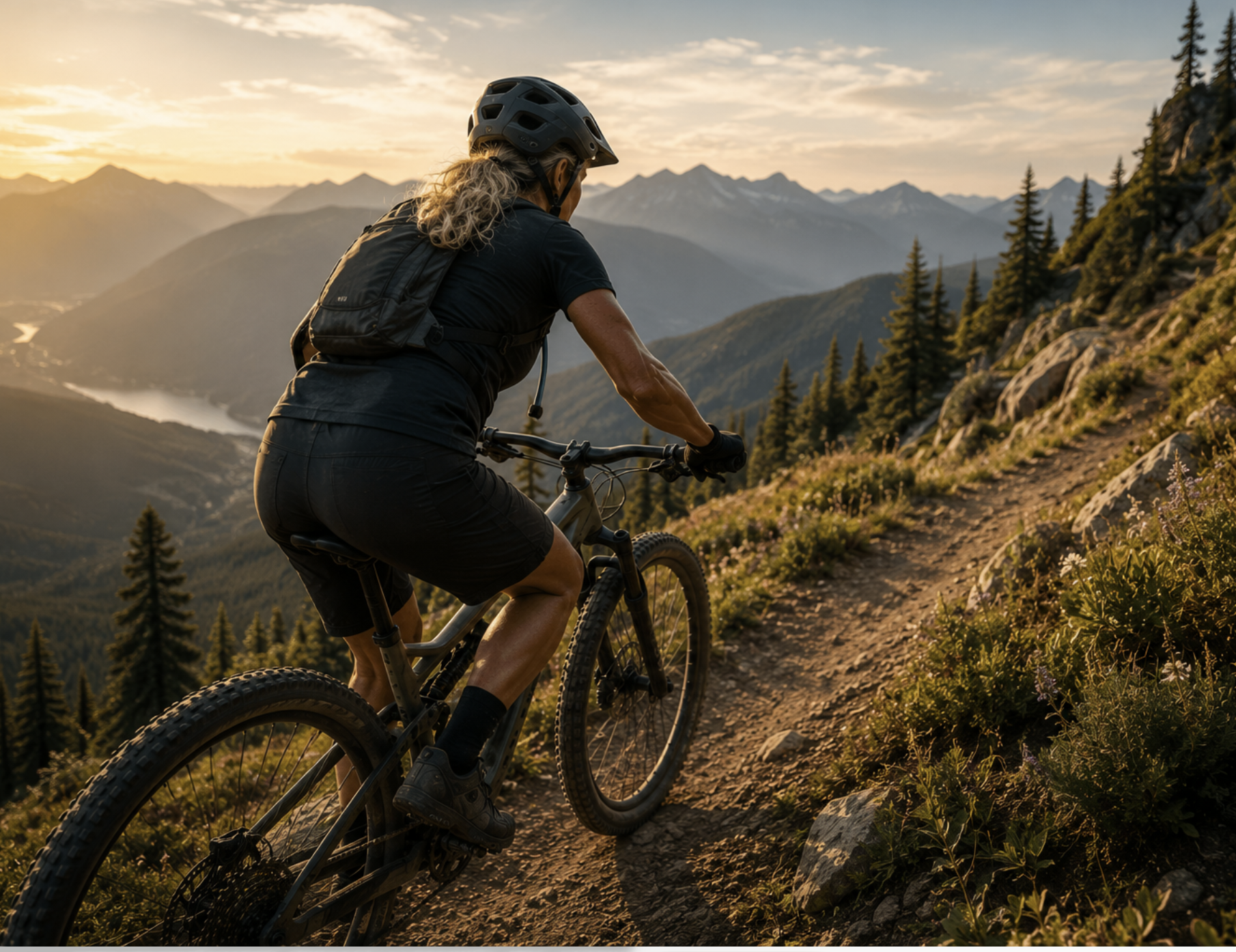
You're hitting your favourite trail. A section you used to clean easily. Now, it feels… different.
Maybe your energy isn't what it used to be. You feel more tired, faster. Perhaps your recovery takes longer. Those aches and pains linger. Or maybe you're noticing a loss of strength, a little less pop off that root.
You might be wondering if it's just "getting older." Or if it's something more specific, like menopause and mountain biking.
Most riders assume these changes are inevitable. That they just need to accept a decline in their riding. In reality, while menopause brings significant physiological shifts, it doesn't mean the end of strong, confident riding. It means you need to adjust your approach.
It's not a "you're broken" problem. It's a "your body's needs have changed" problem.
The Real Impact of Menopause on Your Riding
Menopause is a natural biological transition. It marks the end of a woman's reproductive years. The key physiological change? A significant drop in estrogen and progesterone.
These hormones do more than just regulate your cycle. They play crucial roles in:
Bone density: Estrogen helps maintain bone strength. Its decline can lead to accelerated bone loss.
Muscle mass and strength: Estrogen influences muscle protein synthesis. Less estrogen can make it harder to maintain or build muscle.
Energy metabolism: Hormonal shifts can affect how your body uses fuel, impacting endurance and recovery.
Connective tissue health: Ligaments and tendons can become less resilient.
Sleep quality: Hot flashes and night sweats often disrupt sleep, directly impacting recovery and energy.
Mood and cognitive function: Brain fog, anxiety, and irritability are common, affecting focus and confidence on the bike.
So, when you feel your riding integrity slipping, it's not because you've suddenly lost your skills. It's because the physiological foundation supporting those skills has shifted.
The good news? You can absolutely mitigate these effects. You can even thrive.
Why Strength Training Becomes Non-Negotiable
Most riders think strength training is about getting "big" or "bulky." For mountain bikers, it's about building resilience. It's about creating a robust body that can tolerate the demands of riding, absorb impact, and maintain quality movement under fatigue.
For riders navigating menopause, strength training moves from beneficial to essential.
Here's why:
Combatting bone density loss: Weight-bearing exercises are the best way to stimulate bone growth and slow bone loss. This is critical for preventing fractures.
Preserving muscle mass: Resistance training directly counteracts age-related muscle loss (sarcopenia) and the accelerated loss seen with hormonal changes. More muscle means more power, better endurance, and better protection for your joints.
Improving metabolic health: Strength training helps maintain insulin sensitivity and can improve body composition, which often shifts during menopause.
Enhancing joint stability: Strong muscles support your joints, reducing the risk of injury.
Boosting mood and sleep: Exercise is a powerful tool for managing mood fluctuations and improving sleep quality.
It's not about becoming a bodybuilder. It's about building a durable chassis for your riding.
The Mistake Most Riders Make: More Cardio, Less Strength
Many riders, when they feel their fitness declining, instinctively do more cardio. More long rides. More intervals.
This is where most riders get stuck.
While riding is important, relying solely on cardio can be counterproductive during menopause. High-intensity cardio without adequate strength support can:
Increase injury risk: Without strong muscles to absorb impact and stabilize joints, repetitive stress from riding can lead to overuse injuries.
Exacerbate fatigue: If your recovery capacity is already compromised by hormonal shifts and poor sleep, adding more high-intensity work can push you into overtraining, leading to chronic fatigue, mood disturbances, and even more performance decline.
Neglect bone and muscle health: Cardio alone isn't enough to stimulate the bone and muscle adaptations needed to counteract menopausal changes.
The answer usually isn't more riding. It's smarter training. It's about building the physical capacity off the bike so you can ride stronger, longer, and safer on the bike.
Your Training Blueprint: Focus on Foundational Strength and Recovery
So, what does this smarter training look like?
It's about minimum effective dose and Consistency (which beats perfection).
Here’s a practical approach:
1. Prioritize Compound Lifts
These movements work multiple muscle groups and joints simultaneously. They are highly effective for building overall strength, bone density, and functional power.
Focus on these key movement patterns:
Squat: Goblet Squat, Barbell Front Squat
Hinge: Romanian Deadlift (RDL), Kettlebell Swing
Push: Push-ups, Dumbbell Bench Press
Pull: Dumbbell Rows, Pull-ups (assisted if needed)
Carry: Farmer's Carry
Example Protocol: The Goblet Squat
This is a fantastic exercise for building lower body strength and trunk stability.
How to do it:
Hold a kettlebell or dumbbell vertically against your chest, cupping the top with both hands.
Stand with feet shoulder-width apart, toes slightly out.
Brace your core.
Initiate the movement by pushing your hips back and bending your knees, as if sitting in a chair.
Keep your chest up, back straight, and elbows inside your knees at the bottom.
Descend as deep as you can maintain good form.
Drive through your heels to stand back up, squeezing your glutes at the top.
Sets & Reps: 3 sets of 8-12 repetitions. Focus on controlled movement, not speed.
Progression: Gradually increase the weight as you get stronger.
2. Emphasize Posterior Chain Strength
Your glutes, hamstrings, and spinal erectors are crucial for power, stability, and injury prevention on the bike. Most riders have underdeveloped posterior chains.
Exercises like Romanian Deadlifts, Glute Bridges, and Kettlebell Swings are excellent.
3. Build Trunk Stability
Your "core" isn't just your abs. It's your entire trunk. A strong, stable trunk allows you to transfer power efficiently, maintain body position on technical terrain, and protect your spine.
Planks, Side Planks, and Pallof Presses are great choices.
4. Don't Neglect Upper Body Pulling Strength
This is vital for bike control, especially on descents. Pull-ups (assisted), Dumbbell Rows, and Face Pulls are key.
5. Prioritize Recovery
This is often the most overlooked aspect, especially during menopause.
Sleep: Aim for 7-9 hours of quality sleep. This is non-negotiable for hormonal balance, muscle repair, and cognitive function.
Nutrition: Focus on whole, unprocessed foods. Ensure adequate protein intake (1.6-2.2g per kg body weight) to support muscle maintenance and repair. Don't fear healthy fats. Stay hydrated.
Stress Management: Chronic stress elevates cortisol, which can further disrupt hormonal balance. Incorporate practices like meditation, deep breathing, or simply spending time in nature.
A Rider's Story: Reclaiming Confidence
One of my riders, Sarah (name changed for privacy), came to me feeling defeated. She was in her late 40s, peri-menopausal, and felt like her riding was falling apart. She was constantly tired, her recovery was slow, and she'd lost confidence on descents. She thought she just needed to "push through" it on the bike.
We shifted her focus. Two strength sessions a week, 45-60 minutes each. We cut back on some of her longer, unstructured rides. We focused on compound lifts, posterior chain work, and building rock-solid trunk stability. We also talked a lot about sleep and protein intake.
Within three months, Sarah reported:
Significantly improved energy levels.
Faster recovery after rides.
A noticeable increase in power on climbs.
Most importantly, her confidence on descents returned. She felt stable and strong, even late in rides.
She wasn't "fighting" menopause. She was working with her body, giving it the support it needed.
The Long-Term View: Riding Longevity
Navigating menopause and mountain biking is a marathon, not a sprint. It requires a long-term perspective. The goal isn't just to survive this period; it's to build a foundation for decades of strong, joyful riding.
By prioritizing foundational strength, smart recovery, and listening to your body, you can not only mitigate the challenges of menopause but emerge a stronger, more resilient rider.
It's about building capacity. It's about durability. It's about staying on the trails you love, for as long as you want to ride them.
Has your training, recovery or riding changed through perimenopause or menopause?
I work with mountain bikers to adapt their strength training, riding load and recovery around the realities of their lives and bodies.
Book a free MTB Training Review.
Happy Riding,
Alex
Take the MTB Rider Assessment — it's free, and it really helps!