Ryan started in September. He’s already feeling the difference. What could you build before next season?
Most of us have an idea of the rider we want to be.
The rider who keeps pushing through the physical sections. Who has something left for another lap. Who feels capable of riding with the friends they look up to, rather than wondering how long they can hang on.
If you race, that ambition might be more specific: a stronger opening round, fewer late-stage mistakes as fatigue builds, more consistent results or the capacity to perform across a whole series.
Perhaps you have a target race next spring. Perhaps you want to move up your category or put together your best season yet.
What are you doing now to move towards it?
Ryan LeCours started my Performance Coaching programme in September. Once he knew it was a fit, he got rolling.
He didn’t wait for January. And after a recent local mini-enduro, he sent me this:
“Wanted to share that I felt awesome from the fitness side of things!”
He has only just started. But he is already noticing what the work means on the trail.
Physical trails. Wet roots. Enough left to push.
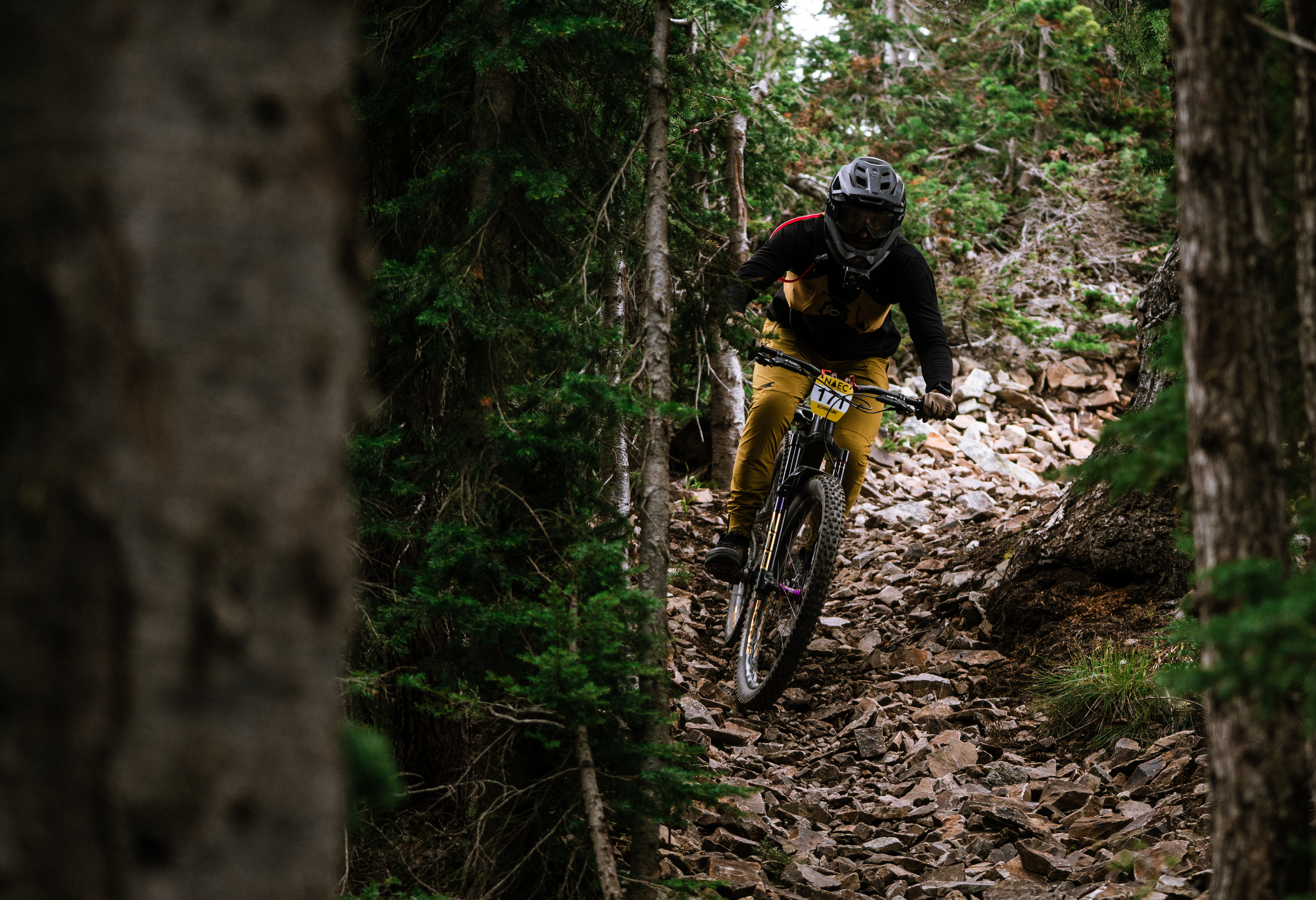
The race included Dad Bod and Pump Track into A-Dog: physical stages where maintaining speed takes work.
As Ryan explained:
“You have to hammer every root-pump and work to keep speed.”
The tracks were soaking wet, with slippery roots keeping everyone attentive. Despite those conditions, he reported feeling very little fatigue on both stages.
That is the kind of feedback I want to hear. Mountain biking asks you to do more than get yourself to the top. You need to move with the bike, work the terrain and produce another effort when the trail demands it.
Ryan felt physically capable of doing that.
One section particularly stood out. Pump Track includes an uphill sprint of roughly 30 seconds. He felt good enough to remain standing and power through the entire effort, while some friends sat down and shifted into easier gears.
Their choices don’t tell us who was fitter or what tactics they were using. What matters is Ryan’s experience: he could sustain the effort he wanted to make.
For a racer, those moments are part of the preparation question. Can you produce an effort where the course rewards it? Can you repeat demanding work across stages and still feel ready for what comes next?
The riders who make you want to improve
Ryan’s message also mentioned the fast friends he regularly rides with—and acknowledged that there was still work to do to catch Richie (Rude) and JT (Fischer).
That combination will be familiar to plenty of riders. You enjoy the riding you can do now, while seeing another level you would love to reach.
You know the people who inspire it. They carry speed through sections where you start fading. They find another effort. They make a demanding day look more manageable.
Ryan wasn’t claiming he had suddenly closed the gap. He was excited about how he felt and about the riding ahead. He even suggested friends he could train with for more sustained and higher-intensity riding when the timing was right.
He was already thinking about the next step.
Build towards a season, not just a start line
My approach to Performance Coaching starts with understanding your ambition and the calendar around it.
For a serious racer, “get fitter” is too broad to guide the whole plan. We need to discuss what a successful season would look like, which events matter most and what has limited your performance previously.
Is the goal to arrive at the opening round better prepared? Perform at a particular championship? Maintain consistency through a busy series? Handle practice, racing and travel without feeling progressively depleted?
An overall placing gives us an outcome to aim for. We also need preparation goals we can track: developing strength, improving repeatable efforts, building sustained capacity and establishing training you can maintain when racing begins.
The plan should account for technical practice, riding volume, recovery and the spaces between events. Preparation continues after the first race; the demands change as the season develops.
The same principle applies if you don’t race. Your calendar might revolve around a riding trip, bigger days or simply making more of the season with your friends.
We work backwards from the riding you want to do.
Training built around your starting point
Your goals sit alongside your training background, injury history, schedule and available equipment.
From there, we establish an appropriate starting point, build a progression and adjust it as we learn how you respond.
You should understand what you’re working towards and how the training fits into your week. Your programme needs to account for the riding you want to keep doing, as well as the capacity you want to develop.
Gym results help us track progress in particular exercises. Your experience on the bike provides another important part of the picture.
For racers, that feedback can help shape the next phase of preparation. A result sheet tells us where you finished. Your account of where you felt capable, where you faded and what the course demanded helps us ask more useful questions about the work ahead.
Give yourself enough time to build
If you start training in February or March for a May race, you can still make worthwhile progress.
But if you have the opportunity to begin now, why limit yourself to those final weeks?
An earlier start gives us room to establish your routine, develop exercise technique and work through multiple progressive training blocks. It also gives us time to adjust before your priority events arrive.
Depending on your starting point, a 20% improvement in a specific strength test across two training blocks could be a realistic target. That is a target we would assess individually, rather than an expected result for every rider. Your training experience, consistency and riding demands all affect what is achievable.
It isn’t a promise of a matching improvement in FTP, race speed or strength-to-weight ratio. We choose relevant measures, establish a baseline and track what changes.
An experienced racer may be pursuing smaller gains in a particular quality. Their opportunity may lie in addressing a weakness, improving consistency or managing preparation more effectively across the season.
The point is to give your ambitions enough runway.
Aim beyond getting through it
Think about the difference you want to experience next season.
Hanging on through physical sections, or feeling able to keep working.
Reaching the final stage exhausted, or still having the capacity to race it with purpose.
Scrambling to get ready for round one, or beginning the season with preparation already behind you and a plan for what follows.
That is the difference between surviving and thriving that I want riders to work towards.
Starting now doesn’t guarantee it. But it gives us more time to develop the qualities that could help you get there.
Ryan’s recent message is early feedback, not the finished product. His timeline isn’t a promise for someone else. But he has already given himself weeks of training and learning that he would otherwise still be waiting to begin.
Feeling fitter, still riding with judgement
Ryan’s race report wasn’t a claim that everything had become effortless.
On Orient Express, a trail he rarely rides, he chose to play it safer. Feeling physically good hadn’t replaced familiarity, skill or judgement.
His overall response, though, was clear:
“Overall, I was very stoked on how the riding felt yesterday. Heavily attributed to the great programming!”
That is Ryan’s assessment of his experience. A race report cannot isolate training from every other factor.
What he described was meaningful: little fatigue on physical stages, the capacity to sustain a hard effort and genuine excitement about how the riding felt.
Why not find out how good you can be?
There will always be a reason to start later.
Work is busy. Christmas is coming. January feels like a cleaner beginning.
Those commitments belong in the plan. They don’t automatically have to postpone it.
Ryan decided the programme suited him and started. Now, while next season is still ahead, he is already enjoying how the riding feels.
Whether you want more from your weekend rides or have serious ambitions for the race season, start by defining what you’re working towards. Then give yourself time to pursue it.
Book a free Performance Coaching launch call. We’ll discuss your riding goals, your race calendar where relevant, and what a realistic plan towards your best season could look like.
Why not find out how good you can be?